What a loud start up means
Across Texas, a sharp rattle, thump, or grinding sound when the system starts can point to a loose component, worn bearing, or a failing motor coupler. It’s not just noise, it can be a warning that a part is on the edge of failure. Our team of HVAC technicians hears this across the state and knows the patterns that matter for Texas homes.
When the unit cycles on and off with unusual sounds, it often means something is rubbing or rubbing hard enough to wear parts prematurely. Left unchecked, a small issue becomes a bigger repair bill or a sudden breakdown in the middle of a hot Texas afternoon.
Common culprits you might notice
A few frequent causes show up across Texas homes: a loose blower wheel, a failing fan motor, a misaligned belt, or a cracked motor mount. In some cases the sound comes from an oversized wrong-sized filter or a duct connection vibrating. The exact part isn’t the point; the pattern and timing tell the story.
Texas homeowners should note when the noise happens: on startup, during heavy cooling, or when the unit transitions from heating to cooling. These clues help our HVAC technicians diagnose faster and get the system back to quiet operation.
What to do right away
Turn off the system if you hear a loud, unfamiliar noise. Running a unit with a potential internal problem can lead to sudden failure. If safe, check for obvious issues like loose outer panels or debris near the outdoor unit. Do not poke around inside the cabinet where moving parts can cause injury.
Call Texas Emergency HVAC for a detailed inspection. We service crews in every Texas metro, so a qualified HVAC technician can reach you quickly, assess the source of the noise, and explain the fix in plain terms. A prompt check can prevent bigger problems later in the season.
What you can expect from a professional visit
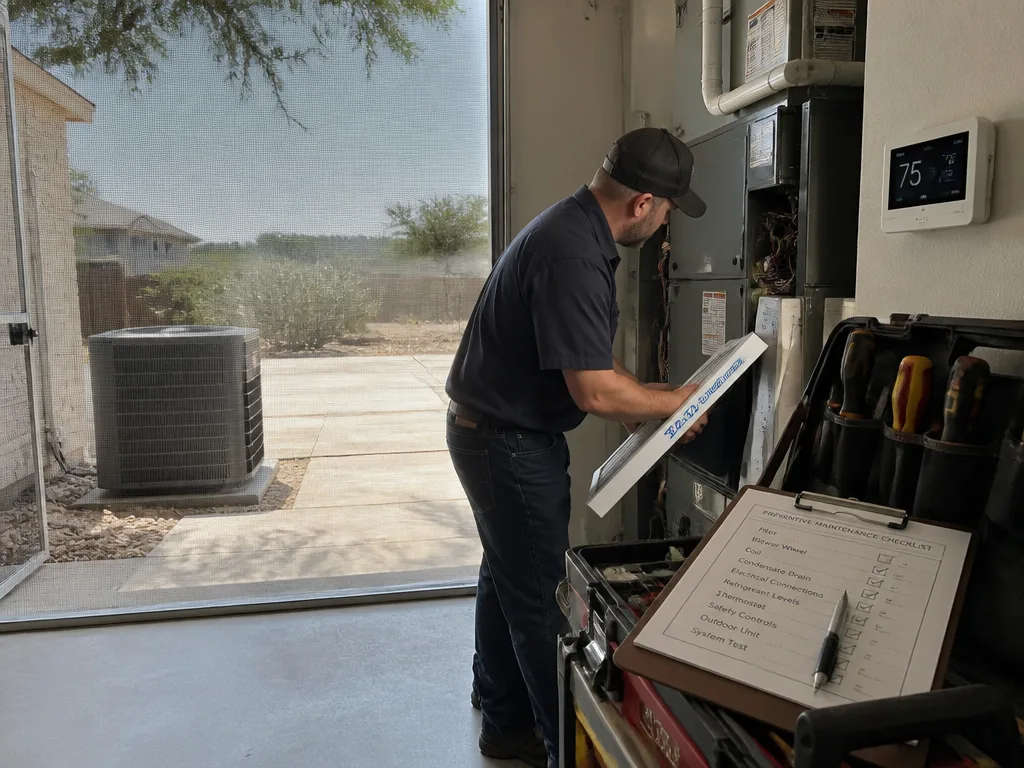
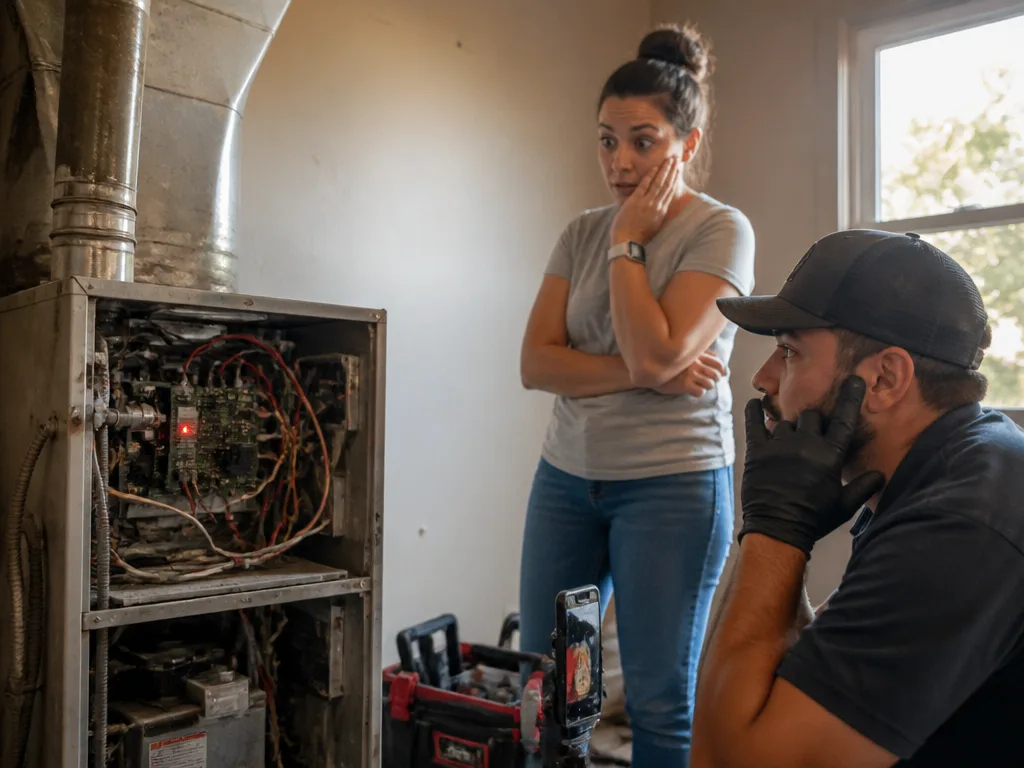
During the visit, our HVAC technician will listen for the sound, inspect the cabinet and accessible components, measure vibration, and test electrical connections. If a part needs replacement, we’ll review options for repair versus replacement and discuss the impact on energy use and reliability. We avoid buzzworthy claims and focus on a straightforward, practical plan for your Texas home.
After the service, you’ll know what caused the noise, what was done, and what signals to watch for going forward. We’ll leave the system clean and secure, with trust that it will run through the next Texas season without surprising you at the worst moment.